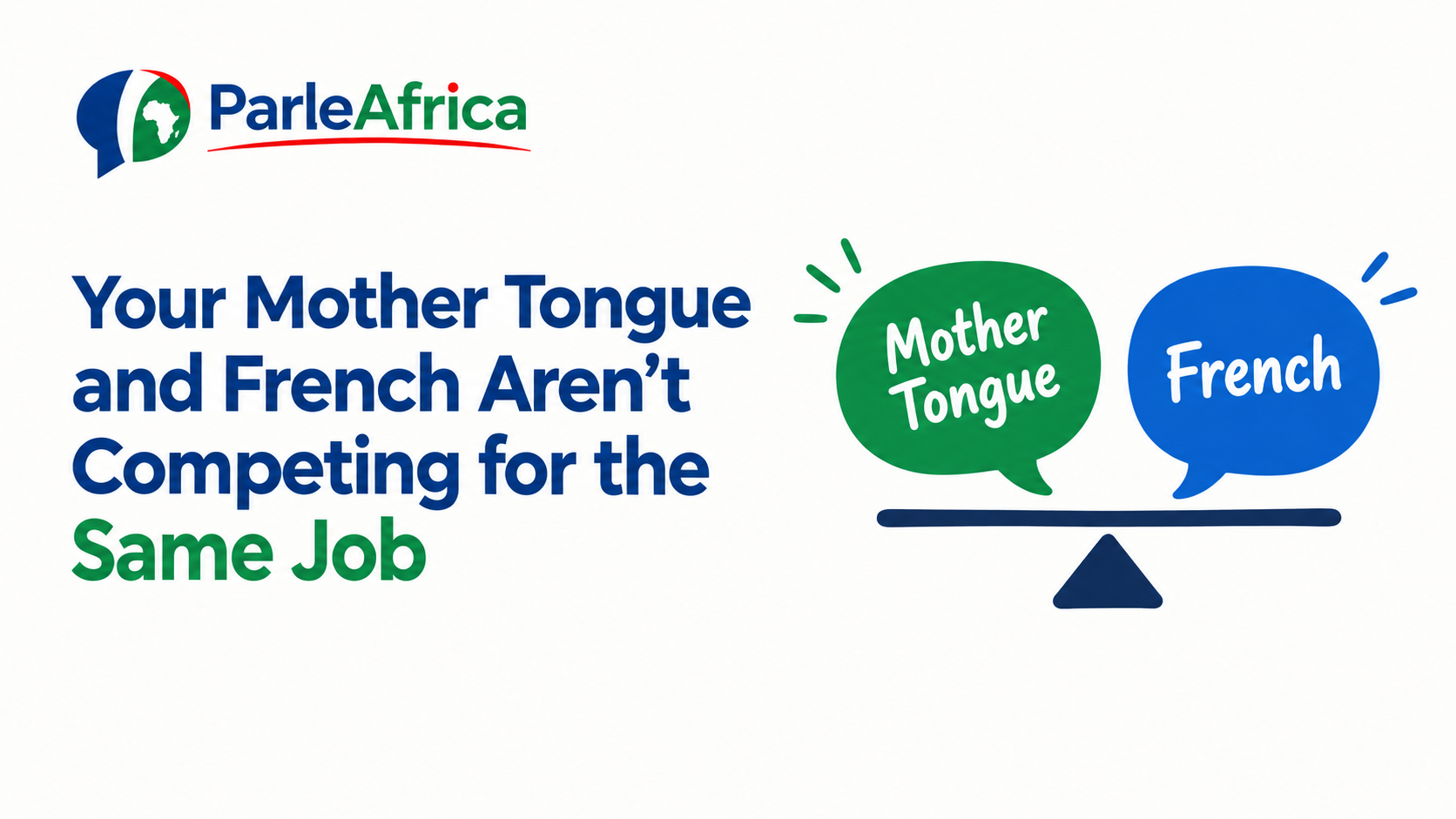
Your Mother Tongue and French Aren't Competing for the Same Job
There's a question that comes up almost every time Africans talk seriously about learning French: Am I trading away my own language to get this one? Here's the real answer.

There's a question that comes up almost every time Africans talk seriously about learning French: Am I trading away my own language to get this one?
It's a fair worry, and it deserves a real answer rather than a dismissal. Language carries more than words; it carries proverbs, humor, family history, and ways of seeing the world that don't survive translation intact.
When a language goes quiet, something real is lost with it. UNESCO has flagged this as a genuine risk across the continent: of the world's roughly 7,000 languages, only 231 are currently used in formal education systems, and a meaningful share of Africa's languages face decline as urbanization and schooling in international languages pull younger generations away from home languages.
So the worry is legitimate. But the usual framing — French or your mother tongue — misses how language actually works in most African lives.
Nobody actually uses just one language for everything
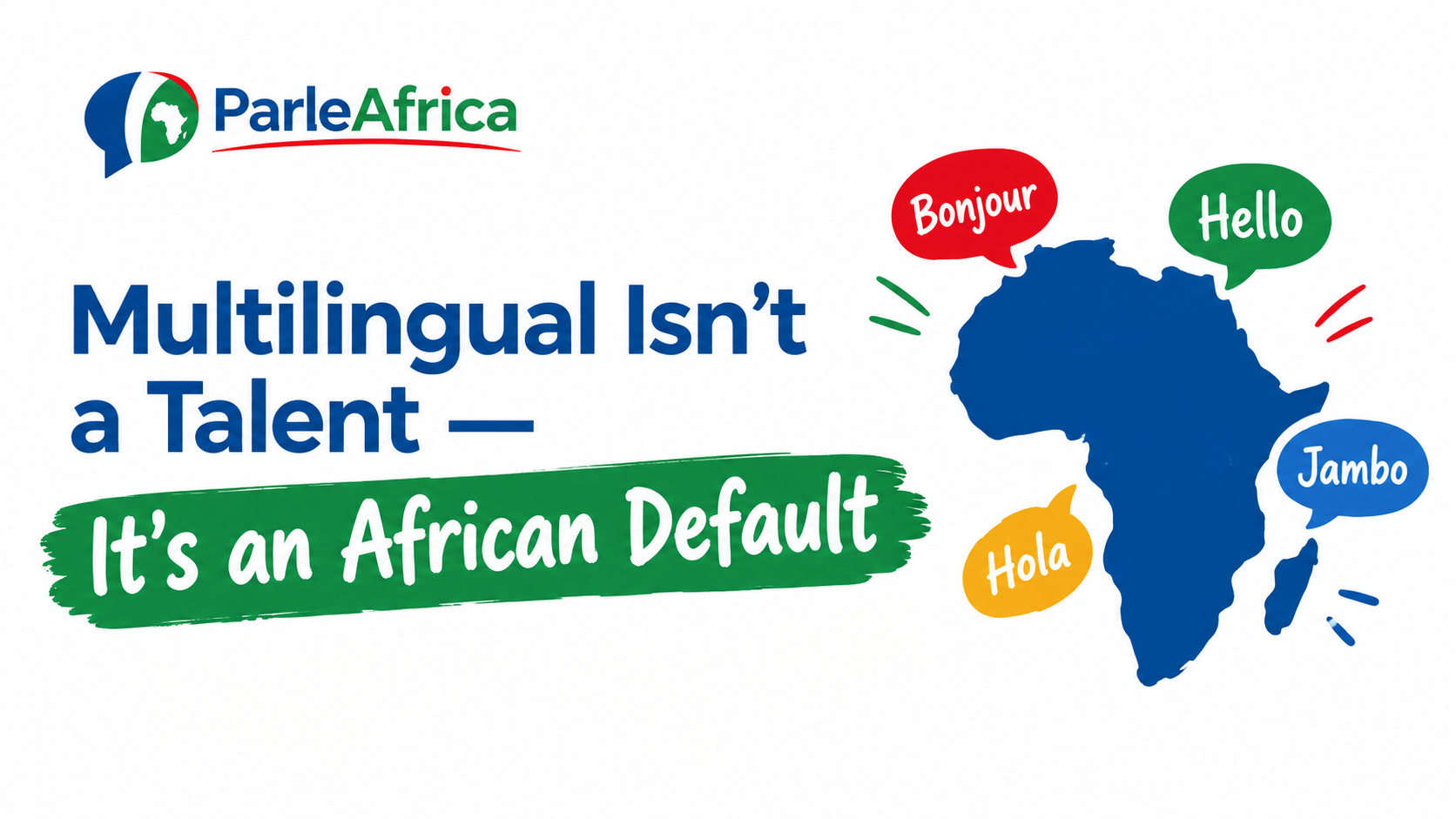
Think about an ordinary day for a lot of people in Ibadan, Abidjan, or Kinshasa. Yoruba or Lingala at home. English or French in the classroom. Pidgin or a market lingua franca for haggling. A different register entirely for church, mosque, or a WhatsApp group. Each language does a specific job that the others don't do as well.
That's not fragmentation — it's a well-functioning system, and it's exactly the kind of arrangement sociolinguists point to when they explain why healthy multilingual communities tend to hold onto several languages at once rather than collapsing into one.
What your mother tongue does that French can't
Your first language carries the parts of culture that resist translation — a Yoruba proverb whose rhythm does half the work of its meaning, an Igbo folktale, a turn of phrase that only makes sense to people who grew up hearing it. That's not replaceable, and it shouldn't be treated as optional. Teaching children to read and write in their home language first, something UNESCO actively encourages, gives them a stronger foundation for everything they learn afterward, including additional languages.
What French does that your mother tongue can't (yet)
French, meanwhile, is doing something different: connecting you outward. The Organisation internationale de la Francophonie's 2026 report puts the number of French speakers worldwide at 396 million, with about 65% of them living in Africa — meaning French is, in practical terms, becoming an African language of wider communication rather than an import.
It opens doors to regional trade across Francophone West and Central Africa, to media and music scenes in Abidjan and Kinshasa, to universities and diplomatic and business networks that operate in French across nearly 20 African countries.
These two jobs — rootedness and reach — were never in competition. They're complementary.
What a partnership actually looks like
Instead of asking whether to choose African languages or French, the more useful question is how to let them support each other:
- Teach children to read and write first in the language they think in.
- Use French (or English) for the connections that cross borders.
- Translate African literature and music into French, and vice versa, so culture travels both ways.
- Treat pride in a home language and fluency in French as two skills on the same résumé, not opposing ones.
The bottom line
You don't lose Yoruba by gaining French. You don't dilute Hausa by learning to hold a conversation in Kinshasa or Dakar. One language keeps you rooted. The other extends your reach across a continent where, increasingly, French itself is becoming an African story.
Held together, they don't compete — they cover more ground than either could alone.
Sources: UNESCO, "UNESCO and the Promotion of Languages in Africa" (2025); Organisation internationale de la Francophonie, La langue française dans le monde (2026 report), as reported by Financial Afrik and France Diplomatie (March 2026).
Did you enjoy this article?
Tap ❤️ to like or 🔥 to superlike
More articles

Practice what you just learned
Join the ParleAfrica community and speak French with real Africans.
Join for free