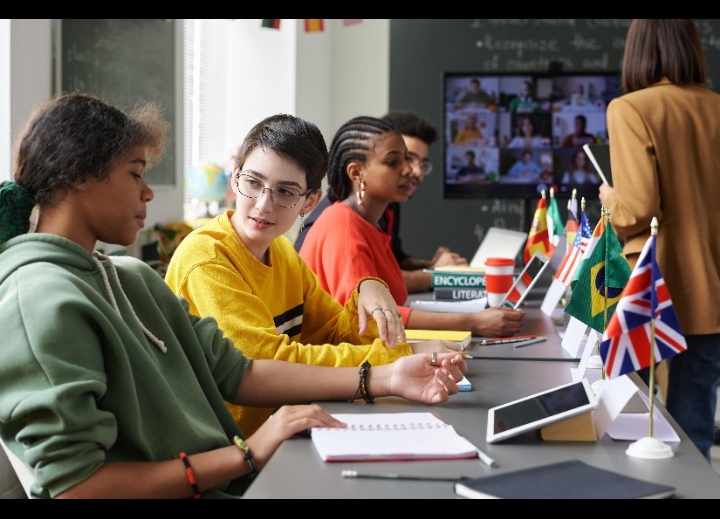
Why Every Student Should Learn a Foreign Language
Your degree tells employers what you studied. Your skills tell them what you can do. Here is why learning a foreign language — especially French — is one of the most powerful investments any student can make.

By Emeka Anastasia Chidinma
Emeka Anastasia Chidinma is an Applied Geophysics student at the University of Benin and a passionate learner, volunteer, and language enthusiast. She is an ambassador for ParleAfrica, where she supports language learning, creates educational content, and engages young people in exploring the value of foreign languages and cultural exchange. She is passionate about personal development, continuous learning, and creating opportunities for young people to connect, learn, and grow.
19 August 2026
"One language sets you in a corridor for life. Two languages open every door along the way." — Frank Smith
As students, it's easy to believe that our degree alone will determine our future. We spend years attending lectures, writing examinations, completing assignments, and working towards graduation. While academic excellence is important, I have come to realise that there are skills beyond the classroom that can completely transform our careers and personal lives. One of those skills is learning a foreign language.
My own journey into language learning began unexpectedly. Like many young people, I watched the popular Spanish series Money Heist. What started as simple curiosity about Spanish gradually became a passion for languages. That curiosity eventually led me to explore French and other foreign languages.
Today, I am an Applied Geophysics student and a ParleAfrica Ambassador, and I now understand that learning another language is not simply about speaking differently — it is about thinking differently, connecting with people, embracing new cultures, and preparing yourself for opportunities beyond your country's borders.
French, for example, is spoken by over 320 million people worldwide and is an official language in more than 30 countries across Africa, Europe, North America, and the Caribbean. For African students especially, learning French is a huge advantage because many neighbouring countries are French-speaking. Speaking French can create opportunities that many people never imagined.
The Beauty of Learning a Foreign Language: It Benefits Every Student
One of the biggest misconceptions about learning French is that it is only meant for linguists or language enthusiasts. The truth is that every student, regardless of their course of study, can benefit from learning a foreign language.
Law Students — French opens doors to international law, diplomacy, arbitration, and cross-border legal practice. It also strengthens communication, negotiation, and analytical skills.
Mass Communication and Media Students — Journalists and media professionals tell stories that cross borders. Speaking French allows you to interview international personalities, report global events, create multilingual content, and reach wider audiences.
Accounting and Taxation Students — Many multinational companies operate in both English and French-speaking countries. Speaking French gives accountants and tax professionals an advantage when working in international finance, auditing, consulting, and compliance.
Marketing Students — Marketing is about understanding people. Learning French helps marketers communicate with diverse customers, understand different cultures, and work with international brands expanding into French-speaking markets.
Insurance Students — The insurance industry is becoming increasingly global. French creates opportunities to work with multinational insurance companies, international clients, and cross-border financial institutions.
Public Administration Students — Government agencies and public institutions regularly collaborate with international organisations. French is one of the official languages of many diplomatic bodies, making it a valuable skill for future public administrators and policymakers.
History Students — Language is closely connected to history. Learning French provides historians with access to original historical documents, archives, and research materials that may never be translated into English.
Arts and Humanities Students — French is one of the world's most influential languages in literature, philosophy, cinema, fashion, and the arts. Learning it broadens creativity and cultural understanding.
Engineering Students — Engineers often work with multinational teams on construction, manufacturing, and infrastructure projects. Speaking French improves communication and increases opportunities across Africa, Europe, and Canada.
Computer Science and Cybersecurity Students — Technology has no borders. Learning French helps developers, cybersecurity professionals, and IT specialists collaborate with international teams, attend global conferences, and access wider career opportunities.
Procurement, Supply Chain, and Business Students — International business depends on communication. Speaking French helps professionals negotiate contracts, build partnerships, and confidently conduct business across borders.
Linguistics Students — French strengthens your understanding of language structures while providing practical communication skills that complement academic studies.
Nursing, Medicine, Medical Laboratory Science, and Medical Biochemistry Students — Healthcare professionals increasingly care for patients from diverse backgrounds. Speaking French improves communication, enhances patient care, and opens opportunities for international training, humanitarian work, and employment abroad.
Geophysics, Geology, Environmental Science, and Other STEM Students — As an Applied Geophysics student, I know firsthand how valuable international collaboration can be. Whether working in oil and gas, mining, environmental consulting, renewable energy, or scientific research, professionals often work with colleagues from different countries. Speaking French can make collaboration easier and create opportunities throughout West Africa and beyond.
The truth is simple: your degree tells employers what you studied, but your skills tell them what you can do. Speaking a foreign language is one of those skills that sets you apart. It builds confidence, expands your professional network, and prepares you for opportunities beyond the classroom.
Language Builds Bridges
History teaches us that language has always connected people. Many missionaries and scholars who came to Africa took time to learn indigenous languages before translating educational materials and religious texts. They learned languages such as Igbo and translated the Bible so local communities could understand it in their own language.
They recognised that learning another person's language builds trust, preserves culture, and creates understanding.
If people from thousands of miles away could dedicate themselves to learning African languages, why shouldn't we embrace the opportunity to learn another international language ourselves? Language is not just about communication — it is about respect, connection, and opening doors.
Consistency Is the Secret
I understand that student life is demanding. Between lectures, projects, SIWES, assignments, examinations, and personal responsibilities, finding time to learn something new can feel difficult.
But I have learned one important lesson: consistency beats convenience.
The right things in life are rarely the easiest to begin. Yet they become the most rewarding when we remain committed. Learning French — or any foreign language — is not about becoming fluent overnight. It is about learning one word today, one sentence tomorrow, and gradually building confidence over time. Small, consistent efforts produce extraordinary results.
Why I Believe in ParleAfrica
As your friend and as a ParleAfrica Ambassador, I would never recommend something I don't genuinely believe in.
ParleAfrica is more than a language learning platform. It is a community that encourages growth, cultural exchange, confidence, and continuous learning. Through its platform, learners progress step by step, complete assessments, receive feedback, and steadily improve their language skills in a supportive environment.
Learning French with ParleAfrica is not just about speaking another language — it is about preparing yourself for the future.
A Final Word to Every Student
Whether your dream is to study abroad, build an international career, travel the world, work with multinational organisations, earn scholarships, make friends across cultures, or simply challenge yourself to become a better version of yourself — learning a foreign language is one of the greatest investments you can make.
Do not let temporary excuses stop permanent growth. Don't stop because it feels difficult. Don't quit because life is busy. Start where you are. Stay consistent. Finish strong.
One day, you'll look back and realise that learning a foreign language wasn't just another skill — it was the decision that opened doors you never imagined possible. Because sometimes, one new language can change an entire future.
Bonne chance, et continuons à apprendre ensemble ! — Good luck, and let's keep learning together.
Did you enjoy this article?
Tap ❤️ to like or 🔥 to superlike
More articles

Practice what you just learned
Join the ParleAfrica community and speak French with real Africans.
Join for free